Pandemonium
Fantasy-infused hacking game where firewalls are cursed, code is holy, and every breach pushes the system closer to chaos.
The Game
Pandemonium is an arcade-logic game built from scratch using C++ and Raylib. You play as a “Cyber-Exorcist”—a hacker whose job is to purge digital threats. The goal is simple but stressful: breach the enemy system before they fry yours.
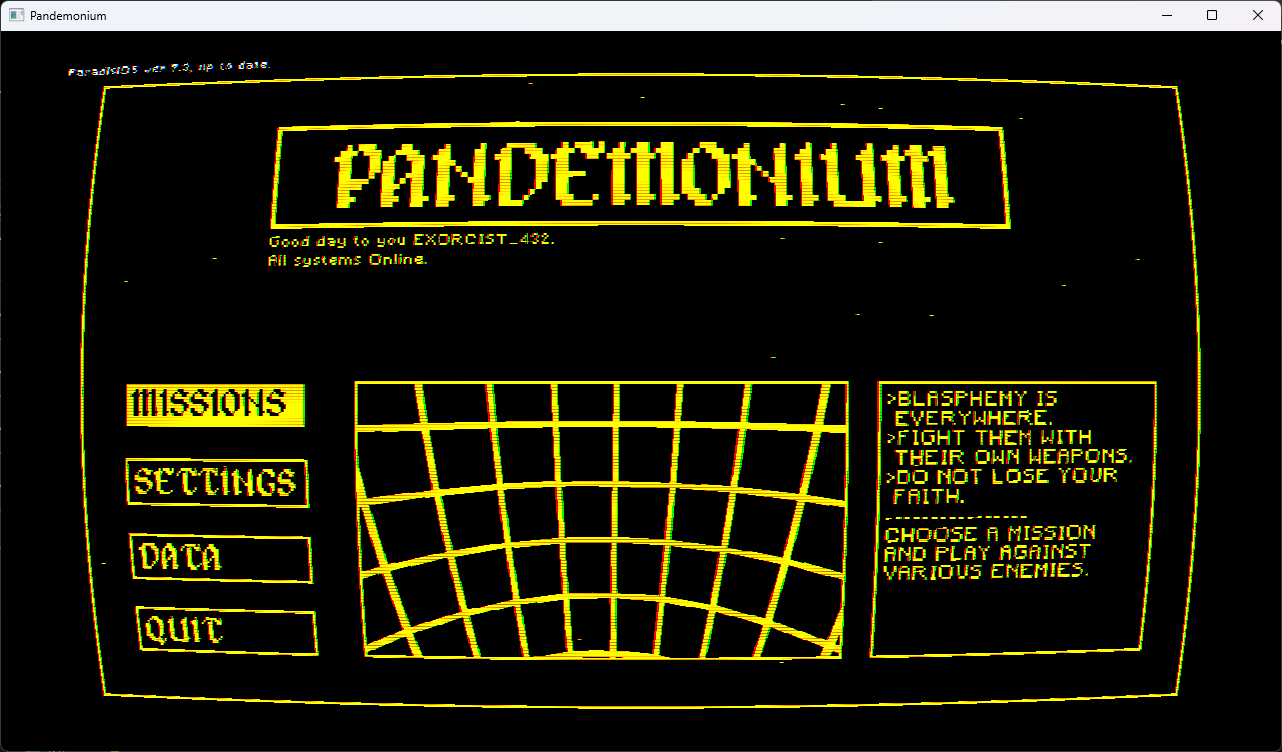
Main Point
It’s an arcade multi-tasking duel. The gameplay loop forces you to handle two things at once:
- Offense: You are the hunter. You scan networks, crack passwords, and launch payloads.
- Defense: You are the target. When the enemy hits back, you have to manually “patch” your firewall by solving arcade minigames in real-time.
There are 3 difficulty levels. Beating them rewards you with fragmented lore entries—piece them together to uncover the dark truth behind the “Pandemonium” project.
Gameplay Overview
The Cockpit (Terminal Interface)
Your main hub is a retro-styled hacker terminal. You type commands, monitor system logs, and watch your health bar (integrity) nervously.
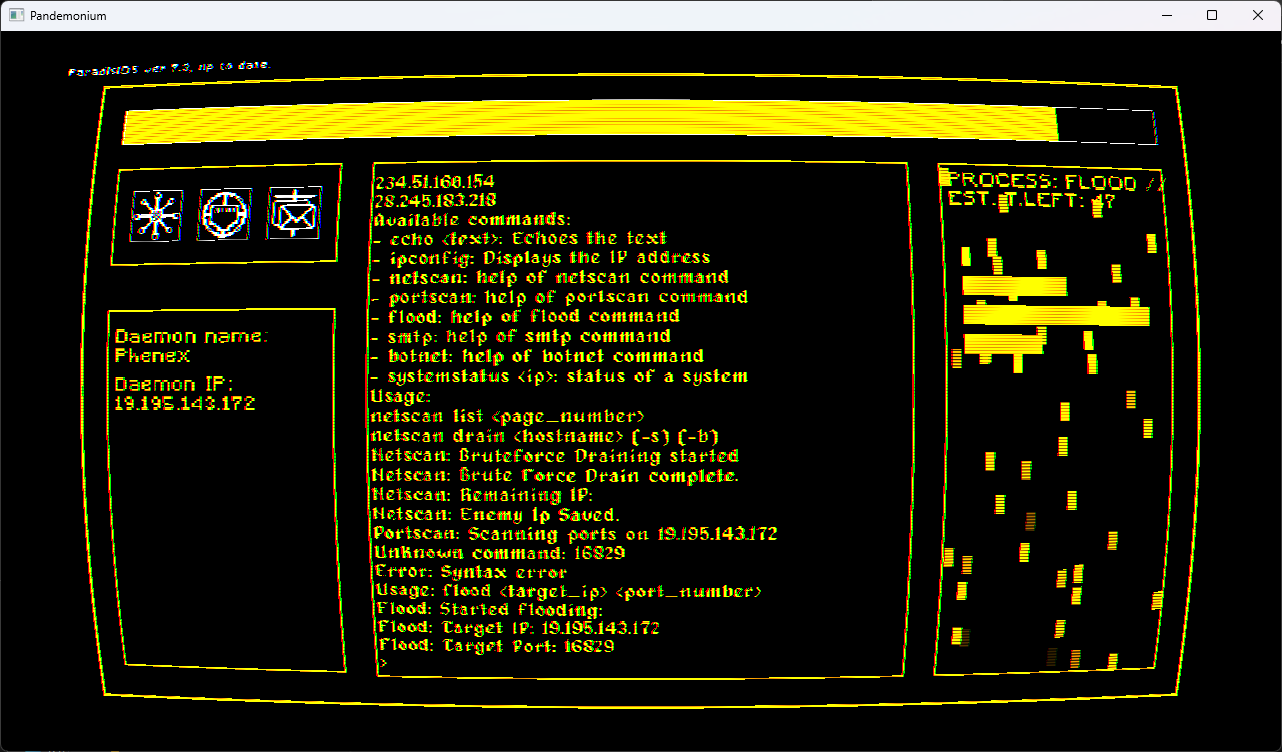
Going on the Offensive
You have an arsenal of cyber-attacks at your disposal, executed via terminal commands:
- Netscan / Portscan: Reconnaissance is key. Find their IP and open ports to strike.
- SMTP Hack (Mail Bomb): Send a malicious email. It’s risky (20% success rate), but effective.
- DDoS (Flood): Overwhelm their bandwidth with packet floods.
- Botnet: Mobilize your army of zombie PCs for a coordinated strike.
The Defense (Panic Mode)
When the enemy counter-attacks, you have to fix the damage manually through minigames:
-
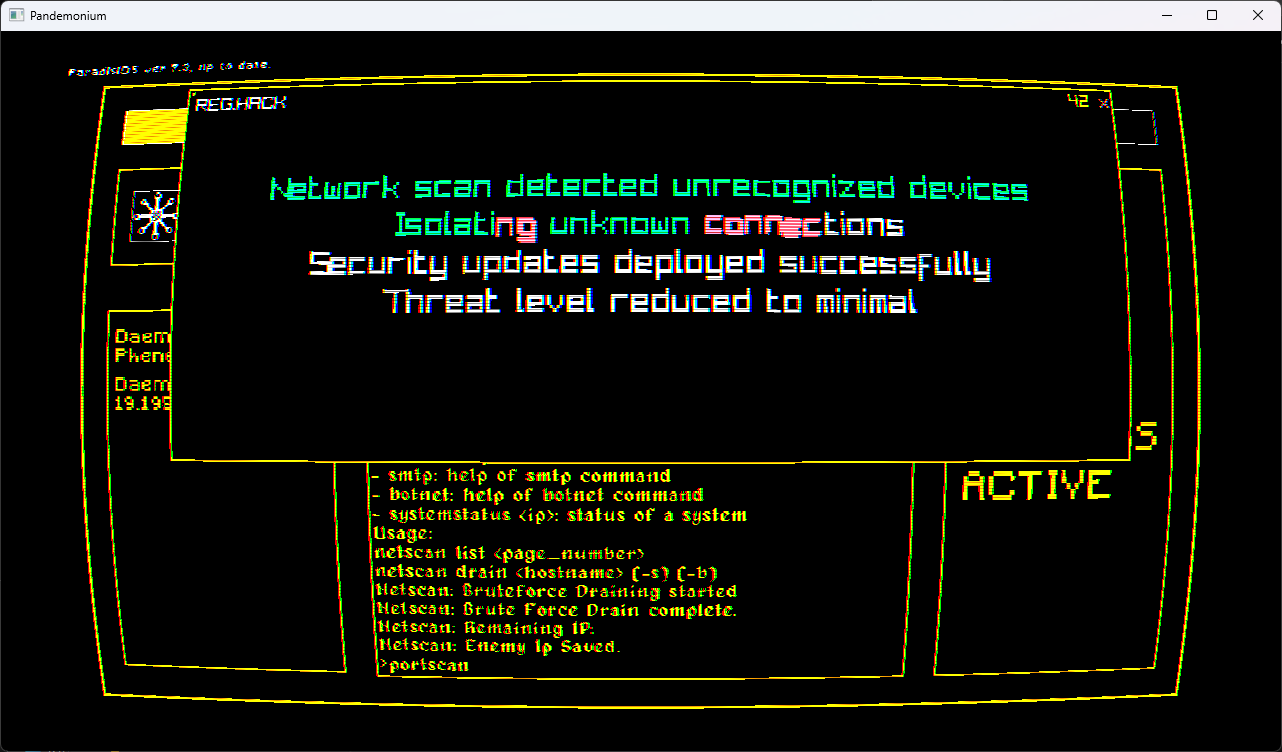
Firewall Patching (TypeGame) A high-speed typing test. You need to rapidly re-type system logs and security protocols (e.g., “System integrity checks in progress”) to block the intrusion.
-
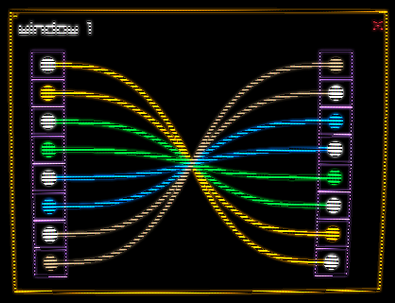
Hardware Fix (ConnectWiresGame) A simulation of crimping an RJ45 LAN cable. You have to match the colored wires (Orange, Green, Blue, Brown) in the correct order before the connection drops.
-
Stream Stabilizer (BallGame) A dexterity challenge. Keep the data packet (the ball) flowing through the network tunnel without crashing into obstacles.
-
Anomaly Hunter (FinderGame) Spot the glitch. The screen fills with fake error messages and code snippets. You need to find and click the specific “malicious” strings hidden in the chaos.
Tech Stack
The project is 98.9% C++, built for performance and arcade feel using the Raylib library.
Technologies Used
- Language: C++ (Standard C++17/20)
- Engine/Graphics: Raylib (Simple, lightweight, powerful)
- Data Management: JSON (
nlohmann/json) - Used inDifficultySelector.cppto save your progress and unlock new difficulties. - Build System: CMake
Code Structure
The architecture is modular, organized in the src folder:
-
src/minigames/- Every minigame inherits from aMiniGamebase class, making it easy to add new challenges.TypeGame.cpp: Handles the typing logic and text verification.ConnectWiresGame.cpp: Logic for the drag-and-drop cable mechanics.FinderGame.cpp: Spawns the random text “pop-ups” for the anomaly hunt.
-
src/gameplay/- The core logic.CommandInterpreter.cpp: Parses your text inputs (likebotnet,netscan) and triggers game events—it basically acts as the game’s shell.Pid.cpp: Manages the background processes (states likePORTSCANorDDOS).Player.cpp: Tracks your stats, IP address, and system integrity.
-
src/managers/GameplayManager: Handles the state machine, switching between the terminal view and the minigames when attacks happen.
Music
Made by me using FLstudio DAW.