ClearTerms
Cybersecurity awareness platform that translates privacy risks into human language with a real-time browser extension and analytics dashboard.
ClearTerms
ClearTerms is a privacy-first cybersecurity awareness platform that translates legal and technical jargon into human language. The system combines a real-time browser extension, an AI analysis pipeline, and a web dashboard so users can understand what a website collects, where data goes, and how risky a platform is.
Overview
ClearTerms helps everyday users make safer decisions online by turning complex privacy policies into clear, actionable summaries. Instead of only blocking threats, it educates and explains why a website is risky.
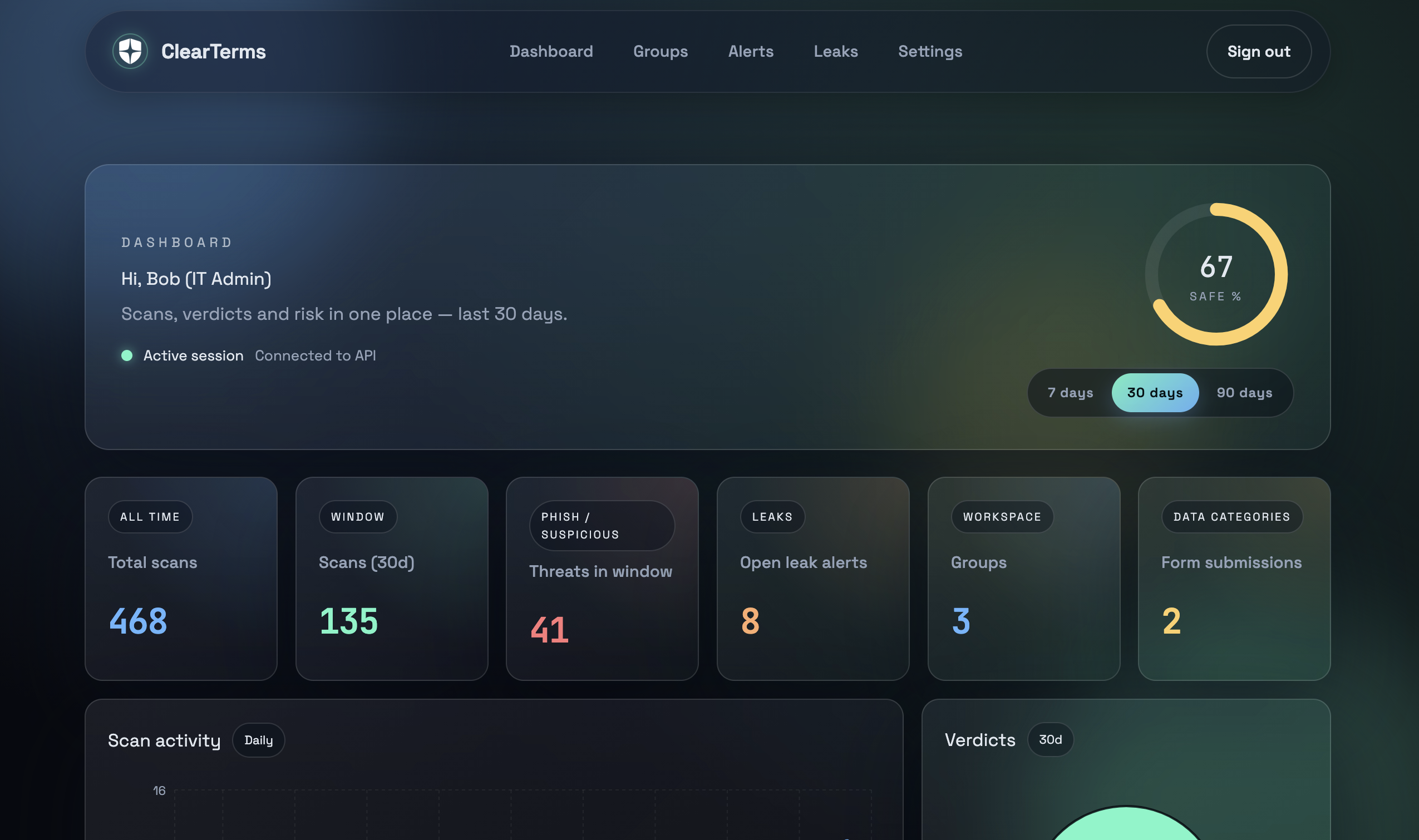
The dashboard surfaces the most important signals with minimal jargon and a clean risk narrative.
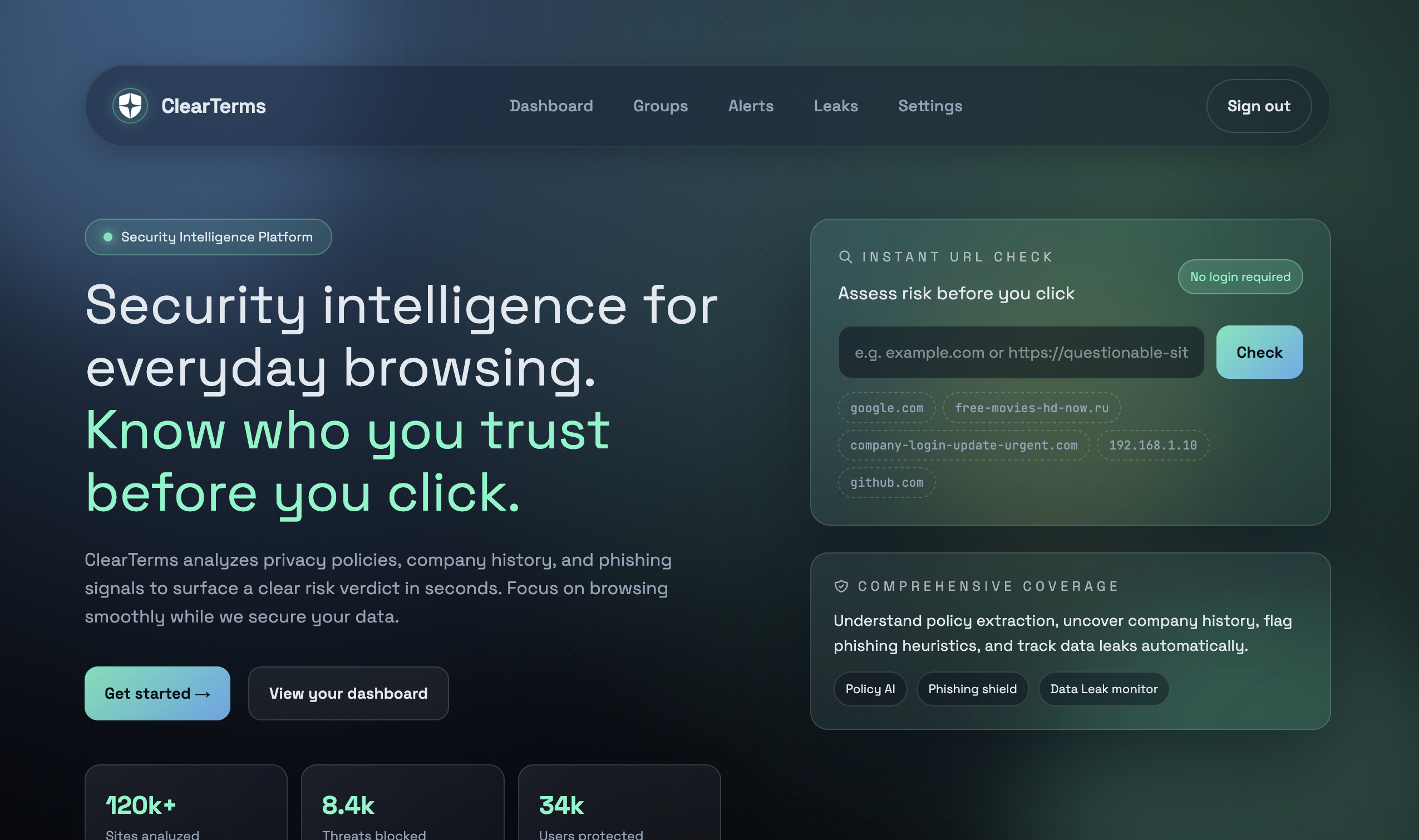
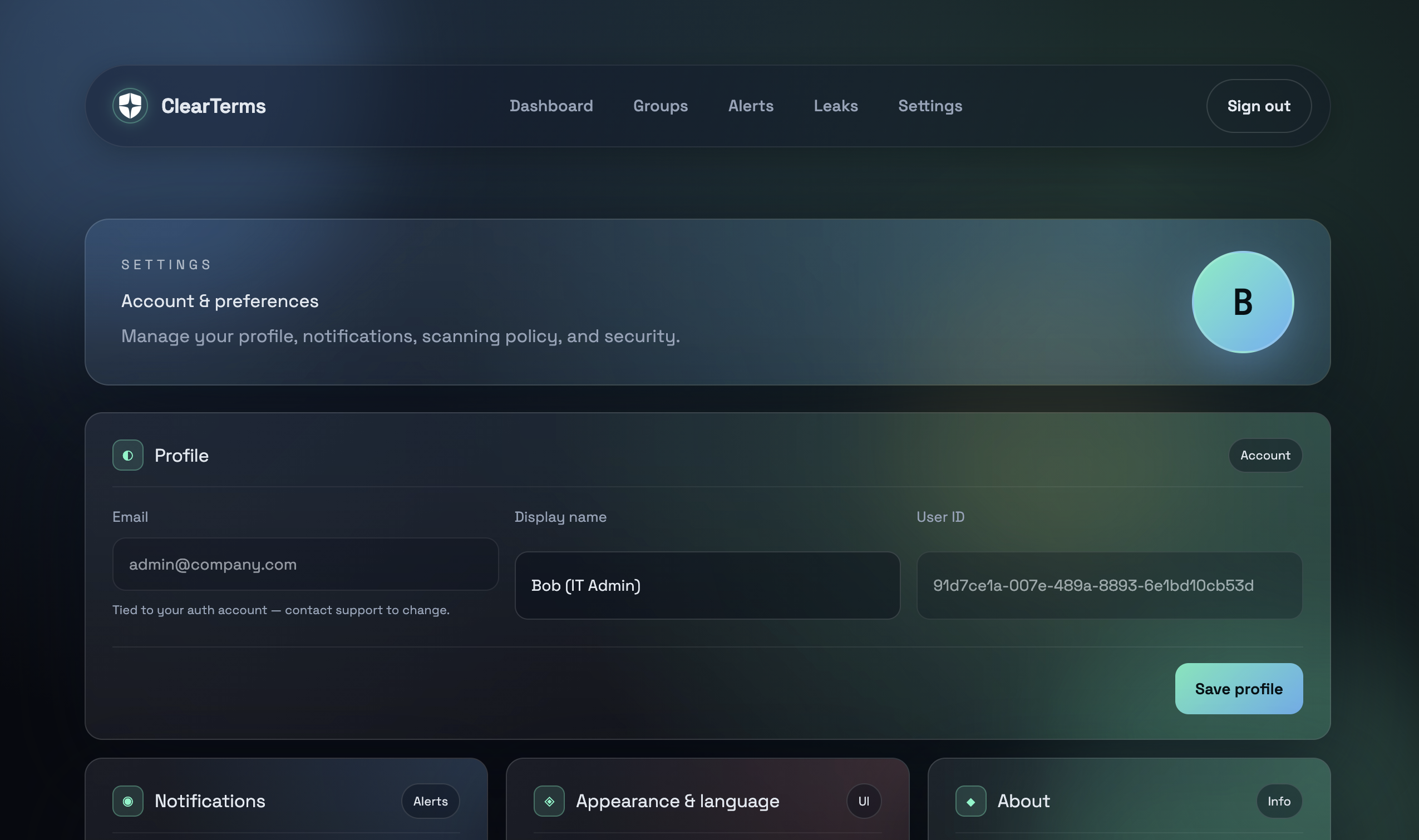
Key views focus on scan history, domain verdicts, and the most urgent alerts.
System Architecture
ClearTerms is built as three modular components that share a single PostgreSQL database.
Browser Extension (MV3) -> POST /api/scan -> Fastify Backend -> Supabase (Postgres + RLS)
Web Dashboard (Next.js RSC) -> /api/dashboard -> Supabase (read)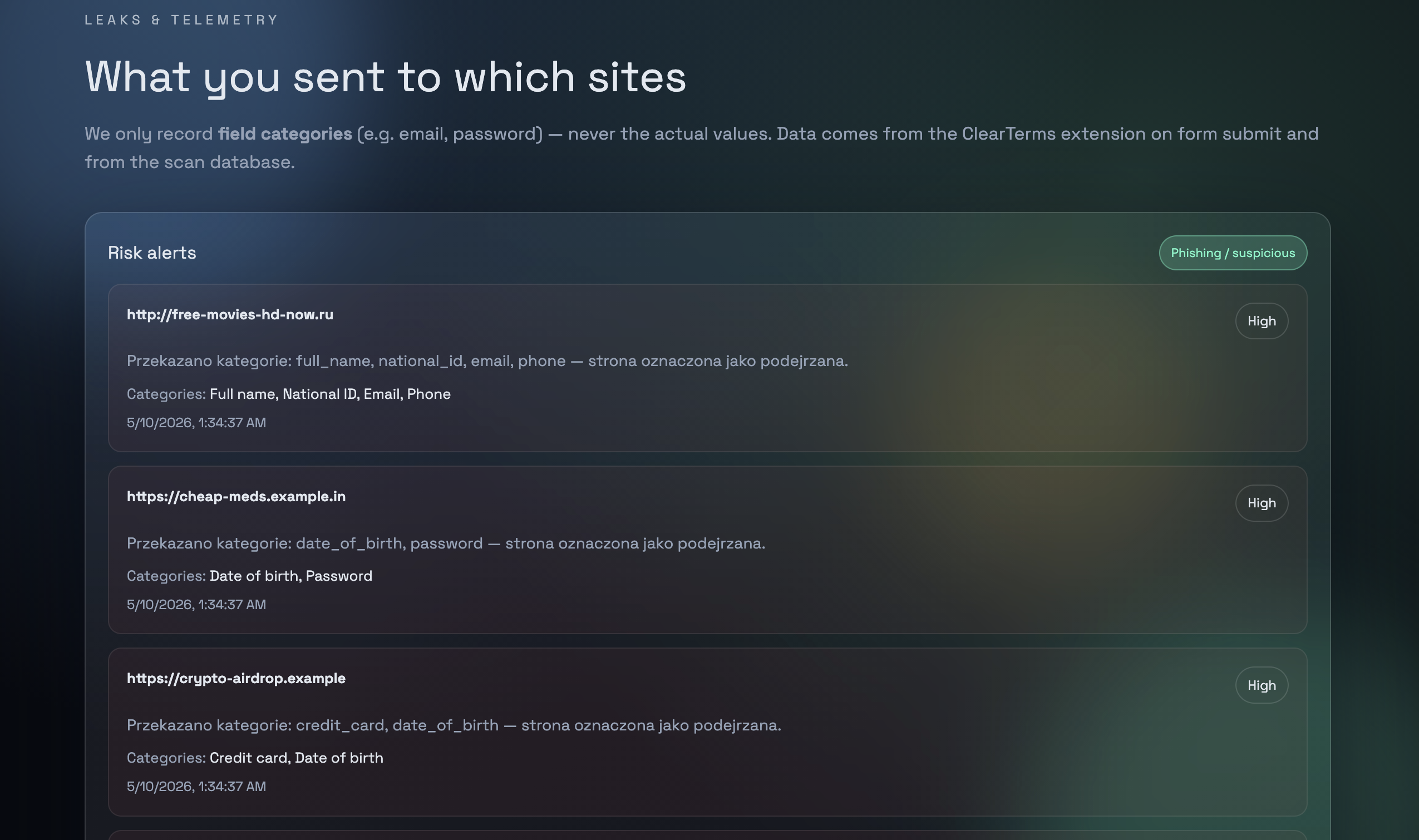
Example Flow: Website Scan
- User visits a website; the extension Service Worker detects the event.
- Content Script extracts privacy policy and metadata from the DOM.
- The extension calls
/api/scanon the Fastify backend. - Backend checks
SCAN_CACHE_TTL_HOURSusing a SHA-256 hash. - If no cache, AI analysis returns
verdict,score (0-100), and findings. - Results are saved with
service_roleto bypass RLS for writes. - Extension renders a warning or block screen based on
verdict.
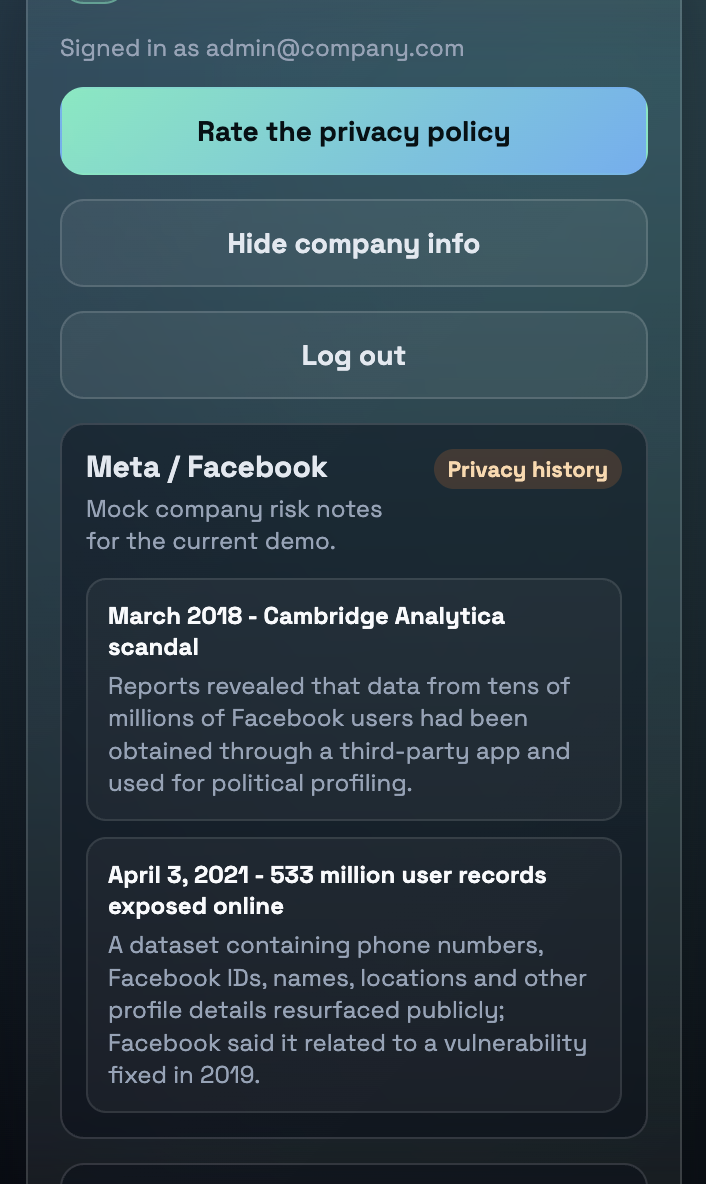
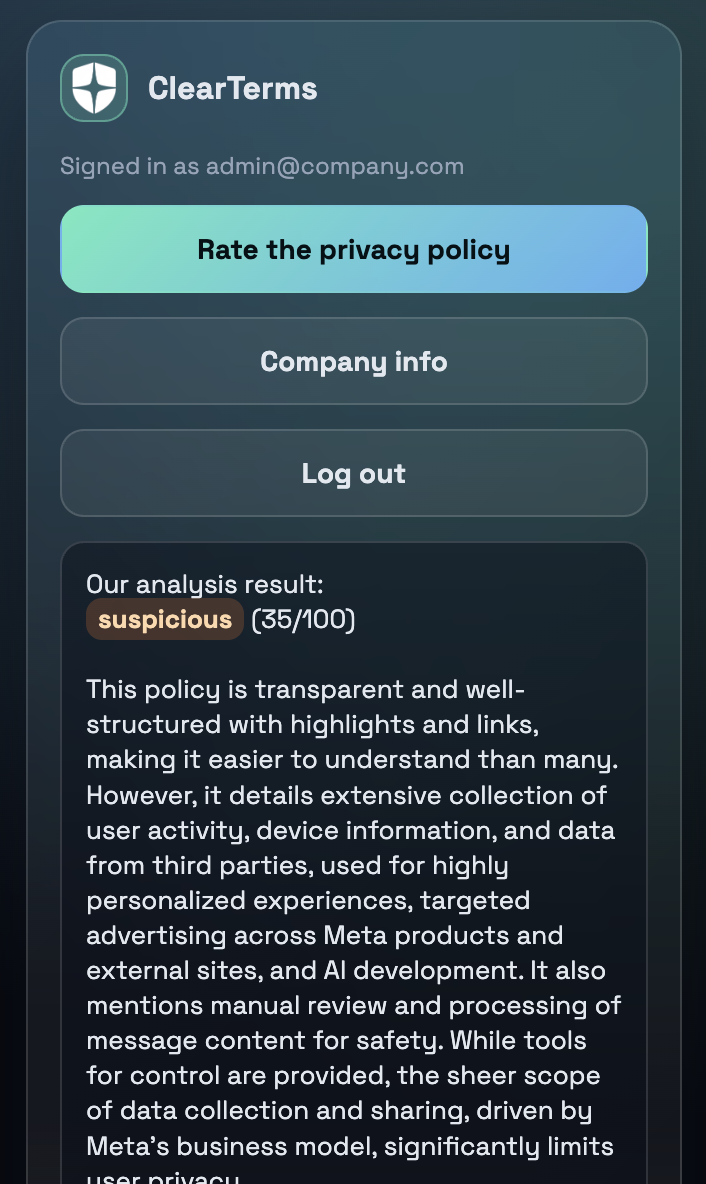
Here the extension surfaces the verdict directly inside the browsing flow.
Tech Stack
Backend
- Fastify (Node.js 20, TypeScript) with
zodvalidation - Supabase (PostgreSQL + Auth + RLS) for secure multi-tenant data
Dashboard
- Next.js 16 (React 19, RSC)
- Tailwind CSS v4 and Recharts for analytics
Browser Extension
- Chromium Manifest V3
- Service Worker + Content Scripts (Vanilla JS)
Engineering Highlights
Deterministic Heuristic Fallback
If AI analysis fails or times out, the backend switches to deterministic heuristics (TLD risk, tracking params, raw IP URLs) and returns partial: true.
Privacy-First Meta Logging
The extension classifies only categories of form data (e.g. EMAIL, PASSWORD) and never transmits user data itself.
Retroactive Leak Alerts
When a domain is later marked as risky, backfillLeakAlertsForSite retroactively checks logs and notifies impacted users.
Defense-in-Depth with RLS
Only Fastify writes to the database using service_role, while strict RLS rules still protect user reads.
Data Model (Core Entities)
auth.users/user_profilesgroups/group_memberswith RBAC (admin,member,child)scanned_sites/site_verdictsscan_historysubmitted_data_log/leak_alerts
API Domains (Sample)
| Domain | Method | Endpoint | Purpose | Auth |
|---|---|---|---|---|
| Auth | POST | /api/auth/login | Create access + refresh tokens | No |
| Auth | GET | /api/auth/me | Current user profile | Yes |
| Scan | POST | /api/scan | Trigger scan | Yes |
| Scan | POST | /api/scan/extension-result | Extension local result sync | Yes |
| Leaks | POST | /api/submitted-data | Submit form metadata | Yes |
| Leaks | GET | /api/leaks/me | Leak alerts feed | Yes |
| Stats | GET | /api/dashboard/stats | Dashboard analytics | Yes |
Local Setup (Short)
Backend
cd backend
npm install
npm run seed
npm run dev
Dashboard
cd frontend
npm install
npm run dev
Extension (MV3)
Load the /wtyczka folder via chrome://extensions with Developer Mode enabled.